Exploring the realm of Debt Consolidation Loan: Lower Your Payments Fast, this introduction sets the stage for a comprehensive dive into this financial solution. It offers a glimpse into the world of debt management, promising insights and strategies to alleviate financial burdens swiftly.
Introduction to Debt Consolidation Loan
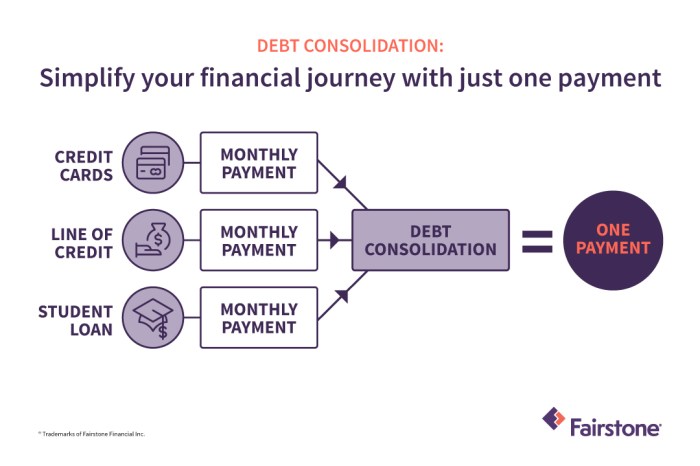
A debt consolidation loan is a financial strategy that involves combining multiple high-interest debts into a single, more manageable loan with a lower interest rate. This new loan allows borrowers to pay off their existing debts and streamline their payments into one monthly installment.
How Debt Consolidation Loan Works
When you take out a debt consolidation loan, the lender provides you with a sum of money to pay off your existing debts. You then make monthly payments on the new loan, typically at a lower interest rate than your previous debts.
By consolidating your debts, you simplify your finances and potentially save money on interest payments.
Benefits of Debt Consolidation Loan
- Lower Interest Rates: Consolidating your debts can help you secure a lower interest rate, reducing the overall amount you pay over time.
- Single Monthly Payment: Instead of juggling multiple payments, a debt consolidation loan allows you to make one convenient payment each month.
- Improved Credit Score: By paying off your existing debts with a consolidation loan, you can improve your credit score over time.
- Financial Discipline: Consolidating your debts can help you stay organized and focused on paying off your debt in a structured manner.
Types of Debt Consolidation Loans
When it comes to debt consolidation loans, there are different types available to help borrowers manage their debts more effectively. Let's explore the various options and understand the differences between secured and unsecured debt consolidation loans.
Secured Debt Consolidation Loans
Secured debt consolidation loans require collateral, such as a home or car, to secure the loan. This type of loan typically offers lower interest rates and longer repayment terms. However, if the borrower fails to make payments, they risk losing the collateral.
Unsecured Debt Consolidation Loans
Unsecured debt consolidation loans do not require collateral, making them a popular choice for those who do not want to put their assets at risk. These loans may have higher interest rates compared to secured loans, but they provide more flexibility for borrowers.
Eligibility Criteria
The eligibility criteria for different types of debt consolidation loans vary depending on the lender and the type of loan. Generally, lenders will consider factors such as credit score, income, debt-to-income ratio, and repayment history when determining eligibility. Secured loans may require a higher credit score and a valuable asset for collateral, while unsecured loans may be more accessible for borrowers with average credit.
How to Lower Your Payments Fast
When it comes to lowering your payments quickly through a debt consolidation loan, there are several strategies you can consider. These strategies can help you reduce your monthly financial burden and get back on track towards financial stability.
Importance of Credit Score in Obtaining a Lower Interest Rate
Having a good credit score is crucial when it comes to obtaining a lower interest rate on your debt consolidation loan. Lenders typically offer better terms to borrowers with higher credit scores, as they are considered less risky. By improving your credit score before applying for a loan, you can increase your chances of qualifying for a lower interest rate.
Negotiating Better Terms with Lenders
It's important to explore options for negotiating better terms with lenders when seeking a debt consolidation loan. You can consider reaching out to your current creditors to discuss the possibility of lowering your interest rates or extending your repayment period
Lenders may be willing to work with you to create a more manageable repayment plan that suits your financial situation.
Risks and Considerations
When considering a debt consolidation loan, it's important to be aware of the potential risks involved. These loans may not be the best option for everyone, and understanding the risks can help you make an informed decision. Here are some key points to consider:
Potential Risks of Debt Consolidation Loans
- Accruing more debt: Consolidating your debts into one loan may free up credit on your other accounts, leading to the temptation to incur more debt.
- Longer repayment period: While your monthly payments may decrease with a debt consolidation loan, extending the repayment period could mean paying more in interest over time.
- Interest rates: Depending on your credit score, you may end up with a higher interest rate on the consolidation loan, which could result in paying more in the long run.
- Fees and charges: Some debt consolidation loans come with fees and charges that can add to the overall cost of the loan.
Assessing if a Debt Consolidation Loan is Right for You
- Evaluate your financial situation: Consider your income, expenses, and overall debt to determine if a debt consolidation loan will truly benefit you.
- Compare interest rates: Make sure that the interest rate on the consolidation loan is lower than the average rate on your current debts to save money in the long term.
- Read the fine print: Understand all terms and conditions of the loan, including any fees, penalties, or changes in interest rates.
Alternatives to Debt Consolidation
- Debt snowball method: This involves paying off your smallest debts first, then rolling the payments into larger debts, creating a snowball effect that helps eliminate debt faster.
- Debt management plan: Working with a credit counseling agency to negotiate lower interest rates or payment plans with your creditors can also help you manage debt effectively.
- Balance transfer credit card: Transferring high-interest debt to a credit card with a lower or 0% introductory APR can save you money on interest payments.
Closure
Wrapping up the discussion on Debt Consolidation Loan: Lower Your Payments Fast, this final section encapsulates key takeaways and parting thoughts, leaving readers informed and empowered to make sound financial decisions.
Frequently Asked Questions
What is the eligibility criteria for a debt consolidation loan?
Eligibility criteria typically include a minimum credit score, stable income, and manageable debt-to-income ratio. Lenders may have specific requirements, so it's advisable to check with individual institutions.
How does a debt consolidation loan affect credit score?
Initially, it might cause a slight dip in credit score due to a hard inquiry. However, by consolidating and managing debt effectively, it can lead to a gradual improvement in credit score over time.
What are the alternatives to debt consolidation for managing debt?
Alternatives include snowball or avalanche methods of debt repayment, credit counseling, and debt settlement. Each option has its own pros and cons, so it's important to assess what works best for individual financial situations.