Delve into the complexities of Hernia mesh revision lawsuits with a captivating title that sets the stage for an informative and engaging exploration of this legal issue.
Explore the nuances of hernia mesh revision lawsuits, from common complications leading to legal action to the role of manufacturers in these cases.
What is a hernia mesh revision lawsuit?
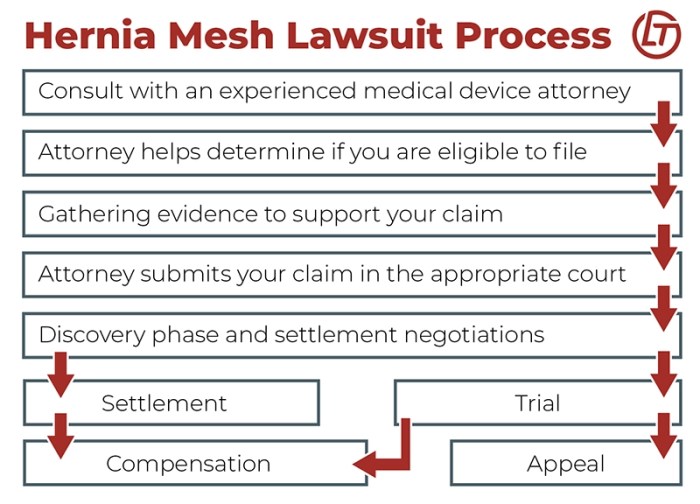
A hernia mesh revision lawsuit is a legal action taken by a patient who has experienced complications or adverse effects after undergoing hernia repair surgery with the use of a mesh implant. In these cases, the patient seeks compensation for damages caused by the defective mesh product or medical negligence.
Complications Leading to Lawsuits
- Mesh migration or shifting within the body
- Chronic pain or discomfort
- Infections or abscesses
- Adhesion formation
- Hernia recurrence
Legal Aspects of Filing a Lawsuit
When filing a hernia mesh revision lawsuit, the patient and their legal team must prove that the mesh product was defective, improperly designed, or that the surgeon or medical facility acted negligently during the implantation procedure. This may involve gathering medical records, expert testimonies, and evidence of the adverse effects experienced.
Common reasons for hernia mesh revision surgeries
After undergoing a primary hernia mesh surgery, some patients may require a revision surgery due to various complications that may arise.
Identify the common complications that may necessitate hernia mesh revision surgeries
- Infection: In some cases, the mesh used during the initial surgery may become infected, leading to the need for revision surgery to remove and replace the mesh.
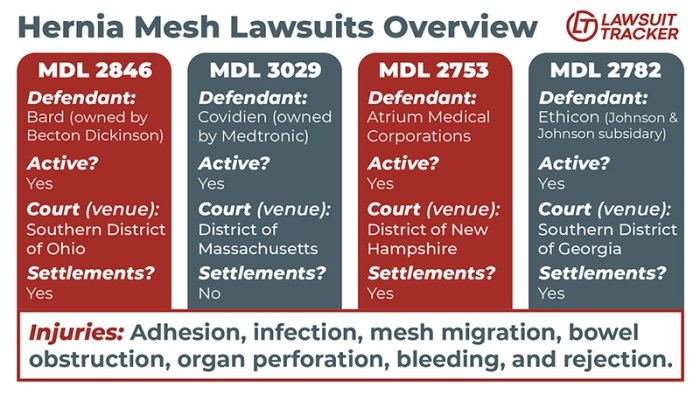
- Mesh migration: The mesh may move from its original position, causing pain, discomfort, and potentially leading to bowel obstructions or other serious complications.
- Mesh shrinkage: Over time, the mesh may shrink, causing tension in the surrounding tissues and leading to pain and discomfort.
- Mesh rejection: Some patients may have an allergic reaction to the mesh, resulting in inflammation and the need for removal and replacement.
Discuss the symptoms that indicate the need for a revision surgery
- Chronic pain or discomfort in the area of the initial hernia repair.
- Swelling, redness, or tenderness at the surgical site.
- Nausea, vomiting, or difficulty passing stool, which could indicate a bowel obstruction.
- Fever and chills, which may be a sign of infection.
Compare the success rates of primary hernia mesh surgeries versus revision surgeries
The success rates of primary hernia mesh surgeries are generally higher compared to revision surgeries. This is because revision surgeries are often more complex, with a higher risk of complications and a longer recovery time. Additionally, the chances of recurrence may be higher in revision surgeries due to the compromised tissues from previous surgeries.
Manufacturers’ role in hernia mesh revision lawsuits.
When it comes to hernia mesh revision lawsuits, manufacturers play a crucial role in the outcomes of these cases. The quality, design, and materials used in hernia mesh products can directly impact the need for revision surgeries.
Prominent Manufacturers and Lawsuits
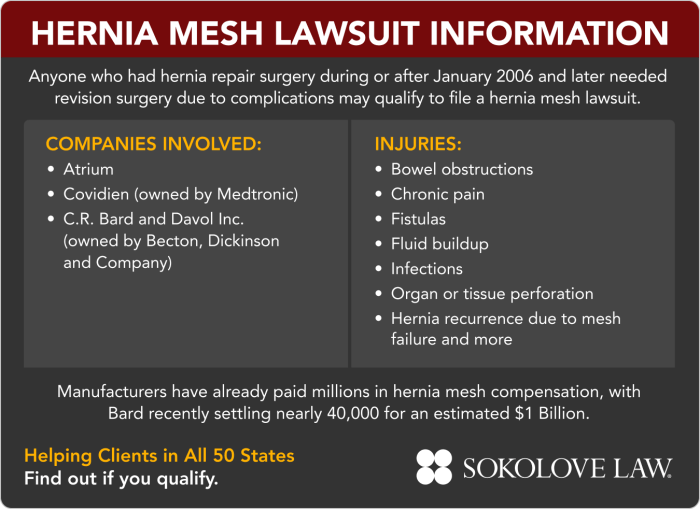
- One of the prominent manufacturers involved in hernia mesh revision lawsuits is Ethicon, a subsidiary of Johnson & Johnson. Their products, such as Physiomesh, have been linked to complications leading to revision surgeries.
- Another major player is Atrium Medical Corporation, known for their C-Qur mesh. This manufacturer has also faced lawsuits due to alleged defects in their products.
Manufacturer Negligence and Defective Products
Manufacturers can be held accountable for negligence in product design, testing, and marketing. Defective hernia mesh products may lead to complications such as mesh migration, infection, adhesion, or rejection by the body, necessitating revision surgeries.
Recalls and Warnings
- Regulatory bodies like the FDA have issued recalls and warnings related to hernia mesh products. These actions are often taken in response to reports of adverse events and complications associated with specific mesh products.
- For example, in 2016, Ethicon voluntarily recalled its Physiomesh Flexible Composite Mesh due to higher than average rates of hernia recurrence and revision surgeries.
Patient experiences with hernia mesh revision surgeries.
Patients who have undergone hernia mesh revision surgeries often share their stories to shed light on the physical and emotional impact of these procedures. These experiences provide valuable insights into the challenges and successes of recovery after revision surgeries.
Physical and Emotional Impact of Revision Surgeries
Patients who have undergone hernia mesh revision surgeries often describe the physical and emotional toll these procedures can take. The physical pain and discomfort post-surgery can be intense, requiring a longer recovery period compared to the initial hernia repair. Additionally, the emotional strain of facing another surgery and uncertainty about the outcome can be overwhelming for many patients.
- Patients often express feelings of anxiety and fear leading up to the revision surgery, knowing they will have to endure another round of recovery and rehabilitation.
- The physical impact of hernia mesh revision surgeries can include prolonged pain, limited mobility, and the need for additional medical interventions to address complications.
- Emotionally, patients may experience frustration, depression, and a sense of loss as they navigate the challenges of recovery and adjust to the changes in their daily life.
Insights into the Recovery Process
Understanding the recovery process after a hernia mesh revision surgery is crucial for patients preparing for or currently undergoing these procedures. Recovery from revision surgeries can be complex and may involve additional challenges compared to the initial hernia repair.
- Recovery after a hernia mesh revision surgery often requires a longer hospital stay and more intensive post-operative care to monitor for complications and ensure proper healing.
- Patients may need to follow a strict rehabilitation plan, including physical therapy and gradual return to normal activities, to regain strength and mobility after the revision surgery.
- Emotional support and counseling can play a significant role in the recovery process, helping patients cope with the physical and emotional challenges of undergoing a hernia mesh revision surgery.
End of Discussion
In conclusion, the discussion on Hernia mesh revision lawsuits sheds light on the various facets of this legal matter, leaving readers with a deeper understanding of the complexities involved.
Question Bank
What are the common reasons for hernia mesh revision surgeries?
Common reasons include complications like infections, mesh migration, and chronic pain that may necessitate revision surgeries.
How do manufacturer negligence or defective products contribute to hernia mesh revision surgeries?
Manufacturer negligence or faulty products can lead to complications such as mesh failure, requiring patients to undergo revision surgeries.
What are some patient experiences with hernia mesh revision surgeries?
Patients often face physical and emotional challenges post-revision surgeries, with recovery being a crucial aspect of their journey.